By Kara Klaus, @karaklaus

In the 21st century people use social media daily. People post about their new lover or a beautiful location without a second thought, but what if they worried about posting a picture of food because it’s not one widely recognized in America? This is the reality for most underrepresented youth in America.
The 25 participants aged 18 and over identified as low income, and as part of one or more historically underrepresented groups. Once selected, the participants completed an hour-long interview where each youth answered a series of questions which aided in the researcher’s understanding of their perception of social media.
When asked to envision the demographics of those who design their favorite social media platform, without fail the youth described them as predominately younger white males who received a higher education, specifically in a STEM-based major. Few, if any, could picture people of color, or even females in that line of work. Based on the 2018 United States Department of Labor statistics, they assumed correctly.
Next, the researchers asked the youth about the negative aspects of social media as it pertains to their demographic. Youth like “David” felt as though he could only post things that represented American norms; to him, a post about a Latino holiday he celebrated would not get the positive reactions an American holiday like Thanksgiving or Christmas would receive. Some of the participants believed they would be ridiculed for posting about their culture. Most felt it best to adhere strictly to norms widely accepted on social media platforms.
Participants additionally brought attention to the idealistic life portrayed on many Instagram accounts and the pressure to fit into that mold. “Maristela” said that she posted pictures of herself living a lifestyle of travel and comfort, when in reality she struggled with many financial burdens. Most youth in the study also expressed that they believed their low-income status negatively impacted their followers and likes.
While negative impacts of social media do exist, the participants in the study felt as though these platforms gave them three important positive things. Social media provides them representation, a space to share their voice, and a place to create connections. For example, the #blackLGBTQ hashtag helps promote the ideas of individuals in support of this cause as well as allowing people to find and create new connections.
While underrepresented youth expressed both positive and negative aspects of social media, we need to continue to work on making online platforms a more inclusive and welcoming space for people of all demographics. A place to start is by following someone with whom you may have differences, not to incite any negativity, but to gain new perspectives and ideas. Further, perhaps we can take steps on our own social spaces to advocate for those underrepresented groups who deserve to have their voices heard.
Brough, M., Literat, I., & Ikin, A. (2020). “Good Social Media?”: Underrepresented Youth Perspectives on the Ethical and Equitable Design of Social Media Platforms. Social Media + Society,6(2), 1-11. doi:10.1177/2056305120928488
 By Guest Author Samantha Krause
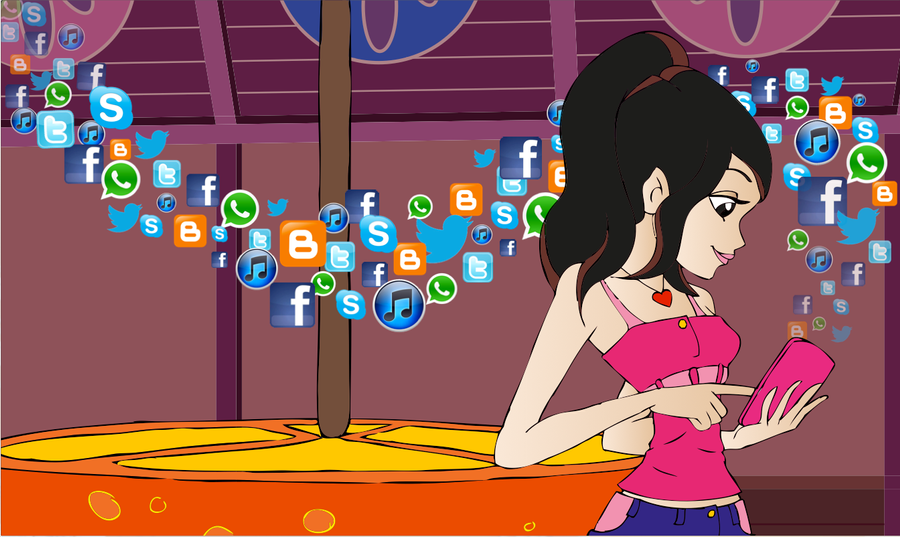
 “R U 4 real?” The use of phrases like this demonstrate how technology has managed to merge itself with the social life of teenagers in the form of instant messaging, text messaging and social networking sites such as Facebook. A little observation will tell anyone that a large percentage of a teen’s time is spent texting on his or her phone or chatting online. With so much time devoted to these activities, researchers want to know if there are any side effects.
 As any Oprah watcher can tell you, texting while driving is a problem. We can make it illegal (it is in a majority of States), but that doesn’t necessarily eliminate what to many still seems like an innocuous act. A coinciding approach involves looking at the reasons people engage in the behavior, and engaging motivations by starting with intentions. Nemme and White took this approach, a variation of the Theory of Planned Behavior, in their study of 17-24 year-old Australian students.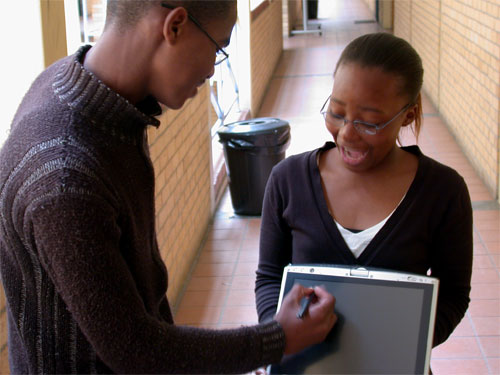
 Quan-Haase examined a wide-range of studies involving North American college and middle/high school students regarding their instant messaging habits, with whom they use IM to communicate, and the effects of IM on their social and academic life. Quan-Haase made the following baseline observations: